PIM has a unique mechanism of action that is differentiated from all known classes of antibiotics, antiseptics, and other antimicrobial polymers. Unlike membrane-active compounds, it does not simply permeabilize the membrane. Experimental data shows that PIM also does not cause bacterial membrane depolarization, a common mechanism for ionophore antibiotics.
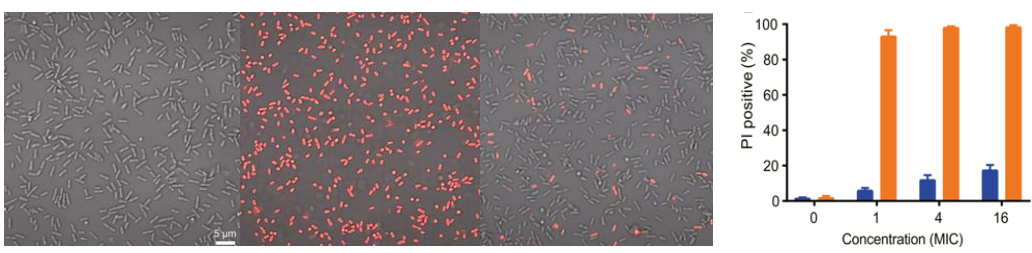
Comparisons of control bacterial cells versus cells treated with antibiotic control colistin and versus cells treated with PIM. Only a small fraction of cells treated with PIM are permeabilised.
Instead, PIM translocate through bacterial membrane and enter bacterial cytosol, where it interferes with essential intracellular activities of the bacteria, and eventually lead to bacterial cell death.
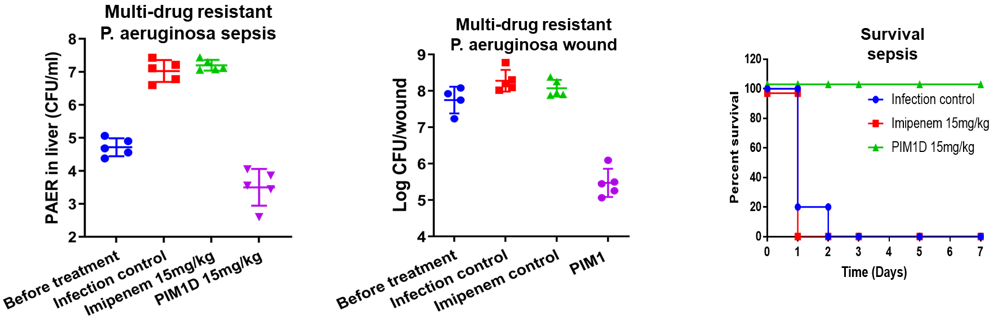
PIM has been shown to be safe and efficacious in mice models. In the safety test, repetitive injection of PIM compound does not lead to mice body weight change or blood biomarker changes. In the efficacy test, PIM effectively rescued mice from a sepsis infection of multi-drug resistant bacteria where antibiotic control imipenem has lost activity. PIM also effectively reduces the wound bacterial load in a wound infection model.